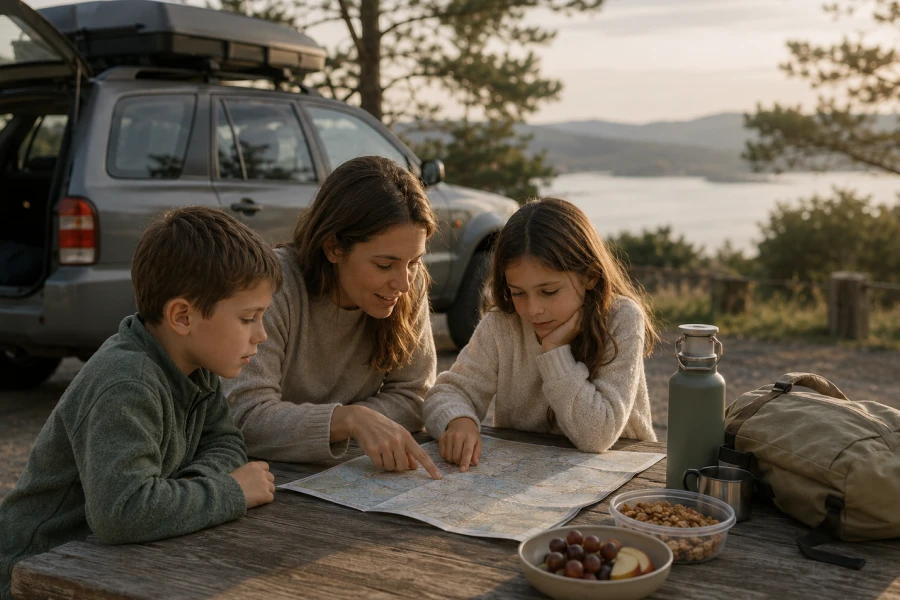
Road trip planning with kids works best when parents accept that the drive is part of the family experience, not just the space between home and destination. Children need rhythm, comfort, movement, food, and reassurance during long travel days. Adults need a system that keeps those needs manageable. Without planning, small problems pile up quickly. A missing charger, poorly timed lunch, or buried change of clothes can shift the mood. A clear approach prevents that kind of chaos. It also helps families start calmly. When the first mile feels organized, everyone has a better chance of enjoying the road ahead.
Routes should be chosen for family rhythm, not only speed. The fastest road may not offer useful bathrooms, safe breaks, good meals, or interesting stops. A thoughtful family travel plan looks at the whole drive. Parents can identify rest areas, parks, towns, gas stations, and backup options before departure. This reduces pressure when someone suddenly needs a stop. It also makes the route feel more predictable for children. Knowing what comes next can reduce repeated questions. The drive becomes easier because the map supports real family needs.
Families often underestimate how long travel takes with children. Bathroom breaks, snack cleanup, stretching, car seat adjustments, and emotional resets all add time. Building a schedule around adult pacing usually creates frustration. A better road trip routine includes wider margins. It also avoids making every delay feel like a problem. Children respond better when adults are not constantly rushing them. Flexible timing helps parents stay patient. It can even make the trip feel more enjoyable. The family moves steadily without turning every stop into a countdown.
Comfort matters because children notice every discomfort in a confined space. The wrong temperature, itchy clothing, bright sun, hard seat belt, or unreachable water bottle can become a battle. Parents can reduce those triggers before departure. A kids travel organization setup keeps comfort items nearby. Blankets, small pillows, sunglasses, layers, and favorite quiet toys can help. The goal is not to create luxury. It is to remove predictable irritations. When children feel physically settled, they usually cope better with boredom. That makes the whole car calmer.
Children often cooperate more when they feel included. Simple choices can give them a sense of control without giving them the whole plan. They might choose between two snacks, two activities, or two approved stops. A family road trip organizer can include those choice points. This turns the trip into a shared experience. It also reduces resistance because children understand they have a role. Parents still guide the structure. Kids simply get small decisions inside that structure. Those moments can improve cooperation during longer stretches of driving.
Many parents pack too many activities and still feel unprepared. The problem is usually not quantity. It is timing and rotation. Kids may enjoy one activity for twenty minutes, then need a different type of engagement. Helpful car activities for children should include quiet options, family games, audio stories, drawing, and screen time if the family uses it. Rotating activities keeps interest fresh. It also prevents everything from being used in the first hour. Parents can save special options for difficult stretches. That strategy makes entertainment feel more effective and less chaotic.
Arrival planning matters because tired families can unravel quickly after reaching the destination. Bags need to be accessible. Children may need food, bathrooms, pajamas, or movement right away. Adults may need check-in details, keys, or reservation information. A calm road trip strategy includes the first thirty minutes after arrival. That small step prevents the final stretch from becoming the hardest part. Everyone knows what happens next. The car unloads in a better order. The family can settle before the day ends in frustration.
Planning a family drive is really planning for transitions. You help children move from home to car, from car to stop, from stop to road, and from road to destination. Each transition becomes easier when the system is clear. Parents can prepare snacks, comfort, timing, activities, and arrival steps in advance. A practical travel planning for parents approach makes the journey feel less reactive. That does not remove every challenge. It gives the family a calmer way to handle them. The trip begins before mile one, and good planning shows immediately.



Leave a comment
You must be logged in to post a comment.